

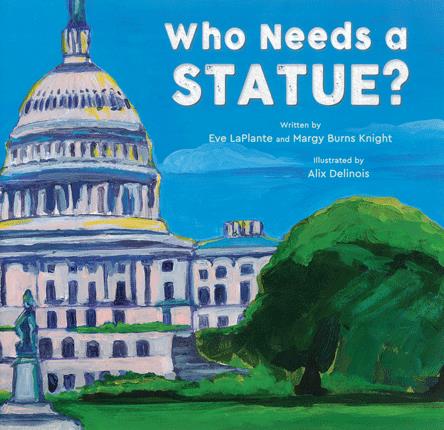
  | Who needs a statue? Author: LaPlante, Eve | |
| Price: $23.78 | ||
Summary:
The U.S. Capitol building features 100 statues, two from each state. But who is chosen to represent this nation? Why? And do they represent this country? This story examines some of the women and BIPOC figures immortalized in statue and examines the question: who needs a statue?
| Added Entry - Personal Name: | Knight, Margy Burns |
| Illustrator: | Delinois, Alix |
Reviews:
Kirkus Reviews (08/15/24)
Booklist (+) (11/01/24)
Full Text Reviews:
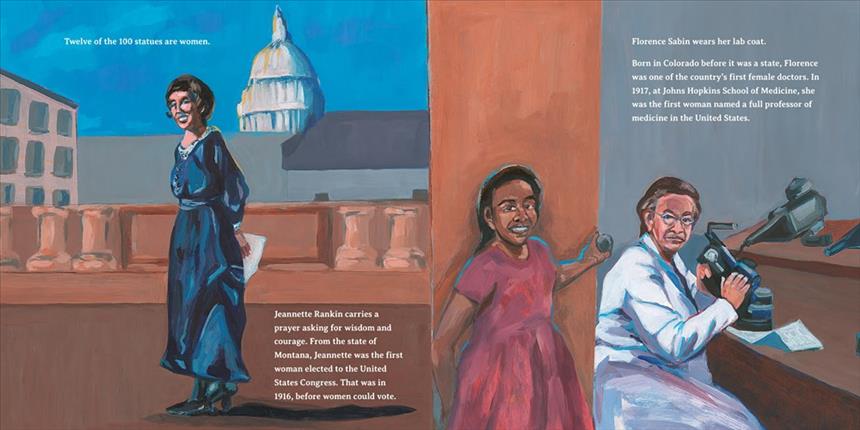
Publishers Weekly - 09/23/2024 Whose accomplishments are commemorated in a public place, for all to see? Of the 100 statutes that stand in the U.S. Capitol Building in Washington, D.C., contextualizing text notes, nine represent people of color and 12 represent women. After offering brief biographies of a few (Paiute writer Thocmetony Sarah Winnemucca and Montana politician Jeannette Rankin, among others), LaPlante, making a children’s book debut, and Knight (Africa Is Not a Country) introduce sculptures across the country that immortalize people of color and women. A statue at San Jose State University honors sprinters Tommie Smith and John Carlos, who stood on the 1968 Olympic winners’ podium "without shoes as a symbol of poverty" and wearing "beads and scarves around their necks in memory of lynching victims." A statue in Chicago’s Ping Tom Park represents Judge Laura Cha-Yu Liu, who in 2012 became the first Chinese American elected to public office in Chicago. Thickly stroked paintings by Delinois (Greetings, Leroy) show scenes from the subjects’ lives as well as the statues in their settings, in a reportorial work that opens conversations about public representation. Short biographies of those discussed in the text conclude. Ages 7-10. (Oct.) - Copyright 2024 Publishers Weekly used with permission.
Publishers Weekly - 09/23/2024 Whose accomplishments are commemorated in a public place, for all to see? Of the 100 statutes that stand in the U.S. Capitol Building in Washington, D.C., contextualizing text notes, nine represent people of color and 12 represent women. After offering brief biographies of a few (Paiute writer Thocmetony Sarah Winnemucca and Montana politician Jeannette Rankin, among others), LaPlante, making a children’s book debut, and Knight (Africa Is Not a Country) introduce sculptures across the country that immortalize people of color and women. A statue at San Jose State University honors sprinters Tommie Smith and John Carlos, who stood on the 1968 Olympic winners’ podium "without shoes as a symbol of poverty" and wearing "beads and scarves around their necks in memory of lynching victims." A statue in Chicago’s Ping Tom Park represents Judge Laura Cha-Yu Liu, who in 2012 became the first Chinese American elected to public office in Chicago. Thickly stroked paintings by Delinois (Greetings, Leroy) show scenes from the subjects’ lives as well as the statues in their settings, in a reportorial work that opens conversations about public representation. Short biographies of those discussed in the text conclude. Ages 7-10. (Oct.) - Copyright 2024 Publishers Weekly used with permission.
Booklist - 11/01/2024 *Starred Review* Every state honors two local, historic celebrities through sculptures in the U.S. Capitol building. LaPlante and Knight’s innovative work considers the 100 statues currently on view and poses important questions: How many BIPOC individuals are included? How many women? And who should be there? After introducing some of the 9 people of color and 12 women currently represented, the text sets off on a cross-country tour of existing statuary, seeking possible candidates. Artworks depict prominent individuals, such as Congresswoman Barbara Jordan, on view in the Austin, Texas, airport, and labor organizer Cesar Chavez, seen in a park in Napa, California. Other statues highlight locals across the U.S. who deserve greater recognition, including Deborah Sampson, who, disguised as a boy, fought in the Revolutionary War—her statue is found outside the public library in Sharon, Massachusetts. States have had the right to request changes since 2000, resulting in such replacements as Mary McLeod Bethune (Florida) and Helen Keller (Mississippi). Expressive illustrations captured with a dynamic color palette portray kids posing next to sculptures, imitating poses, or seemingly engaged in conversation, adding immediacy to the bronze and marble works. Ample back matter provides additional biographical information. This inclusive and fresh approach to communities will pep up local history collections. - Copyright 2024 Booklist.
