

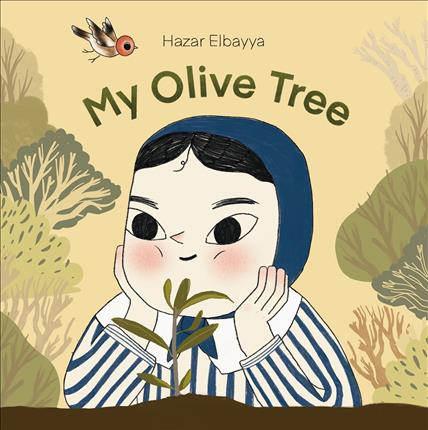
 | My olive tree Author: Elbayya, Hazar | |
| Price: $14.24 | ||
Summary:
A girl's grandpa and her neighbors help her grow an olive tree in a war-torn land.
Reviews:
Kirkus Reviews (10/15/24)
School Library Journal (+) (00/09/24)
Booklist (+) (08/01/24)
Full Text Reviews:
Booklist - 08/01/2024 *Starred Review* Cultivating ResilienceHazar Elbayya’s affecting debut provides hope for peace, community, and freedom in a war-stricken time. Unfortunately, the subject of war continues to be relevant, and broaching the subject with small children can be tricky. While many titles tackling this topic for young readers focus on hope and resilience, Elbayya takes her debut as an opportunity to highlight the power of community, not shying away from the harsh impact of war while showing the resilience and power of depending on those around you. Readers witness a young child’s first interaction with war and learn how dependence on her community fuels hope and resilience in a time of uncertainty. Salam (the Arabic word for peace) is a young girl with a head covering, a peak of curly hair, and a friendly bird that flits by her side. She’s enamored by the work of her grandfather Sido, who dedicates his time to a well-aged crop of olive trees. He’s consistently planting and tending while ensuring Salam understands the significance of the resilient greenery—transparent, but still thoughtful, foreshadowing on Elbayya’s part. Sido notes that the olive tree provides for and connects the community. Amid an earthy backdrop and pops of color for each community member, Salam ventures down the trail of connection, noting at each point what the olive tree provides, from oil for the baker’s bread to Teta Dalal’s olives for afternoon tea and gossip. Moved, Salam plants seeds of her own and impatiently races the next day to see the progress of growth, only to be disappointed with a simple mound of dirt. Sido reassures Salam that “it just needs some time to grow big and strong.” Through patience and care, Salam is soon bestowed the sight of her tree sprouting, a thrilled blush to her cheeks at each panel of growth.However, the tone shifts abruptly, a shadow falling over Salam and her olive tree as the forceful march of soldiers rendered in only gray, black, and white brings destruction to the land. The young olive tree is trampled, and Salam is heartbroken. Sido envelopes Salam in love and care, with a promise to bring back her joy with the help of their community. Following the distinctive keffiyeh Sido wears, readers are led back through the previous trail of community members as he reaches out for support. He guides his community through their town at night, sketched homes with distinctively Middle Eastern architectural motifs lining a curving path around them. Breaching onto the next page is a path lined with community members in the daylight with saplings, shovels, and a plan. Salam, still aching from the loss of her olive tree, follows the path to where the tree used to reside, but she’s surprised to find that, though her tree may be gone, her community remains and has planted more olive trees in kind. The story concludes with an undoubtedly intentional nod toward younger Palestinians: “Just like the olive trees, we are part of this land. And just like the olive trees, when they try to break us, we grow back stronger.” For a child, this story is an excellent way to emphasize the power of community in the face of conflict: if we care for others, they will often care for us in return when we need it most. For adults, the intentional representation of Palestinians and their culture through the practice of growing olive trees will be a sober reminder that there are often those in war-torn situations who only wish for peace for their families and the ability to continue their traditions. Readers familiar with the devastation of war, as mentioned in the author’s note, may find comfort and encouragement for their spirits to endure the difficult time. All around, those who engage kindly with the story will be better off, likely coming away with a better grasp of how community breeds resilience in hard times. - Copyright 2024 Booklist.
